Beyond the Front Door: How Delivery Giants Are Evolving Into Comprehensive Retail Tech Ecosystems


The modern landscape of last-mile logistics has undergone a profound structural metamorphosis. In an increasingly crowded and margin-compressed digital economy, delivery platforms can no longer survive on the traditional transactional model of moving hot meals and packaged goods from point A to point B. Facing the perpetual economic headwinds of high operational overhead, rising labor expenses, and intense competition from retail conglomerates like Amazon, companies such as DoorDash and Instacart are aggressively pivoting. They are transforming themselves from simple courier apps into fully integrated technology ecosystems, offering sophisticated software solutions, artificial intelligence integrations, and powerful retail media networks.
This strategic evolution has triggered a massive wave of consolidation, technological acquisition, and platform diversification. By building out robust business-to-business (B2B) infrastructure, advertising suites, and consumer discovery tools, these logistics providers are fundamentally altering how brands reach shoppers, how retailers manage their supply chains, and how consumers navigate the modern path to purchase.
The Strategic Evolution and Aggressive Expansion Timeline
To understand the current positioning of these delivery giants, one must examine the rapid pace of expansion that has defined the sector over recent years. The playbook of modern logistics companies has shifted from organic user acquisition to aggressive, capital-intensive corporate consolidation.
DoorDash, in particular, has maintained a relentless expansion streak. The company’s strategic maneuvers reflect a clear ambition to dominate multiple facets of consumer commerce—from immediate-consumption dining to long-lead retail shopping and enterprise software. In recent years, DoorDash has poured substantial financial resources into proprietary artificial intelligence assistants, advanced programmatic advertising programs, and comprehensive in-store B2B management solutions.
The timeline of these corporate developments highlights a deliberate, multi-year strategy:
- 2024: DoorDash deepened its retail media footprint by acquiring search ad startup Symbiosys for $175 million, significantly bolstering its targeted advertising capabilities for brands and merchants.
- 2025: The expansion accelerated dramatically with international and vertical acquisitions. DoorDash acquired U.K.-based competitor Deliveroo to expand its European market presence, alongside restaurant reservations platform SevenRooms to solidify its hold on the hospitality and dining sector.
- The Ongoing Consolidation Wave: Industry analysts point out that recent integration efforts—such as absorbing massive grocery networks including Walmart and Sam’s Club through broader market consolidation—have positioned DoorDash as an unavoidable partner for major consumer packaged goods (CPG) brands.
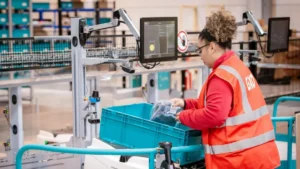
However, this rapid growth brings structural complexities. Neil Saunders, managing director of GlobalData, notes that these hefty acquisitions will require meticulous operational streamlining to prove sustainable as long-term investments. Saunders highlights a fundamental divergence in operational models: while digital grocery orders continue their exponential growth, legacy fulfillment architectures—such as those historically utilized by Instacart—still rely heavily on manual, human-driven item picking. This method remains labor-intensive and challenging to scale efficiently without deep technological intervention.
Consequently, industry experts argue that the ultimate survival of these platforms depends on repositioning themselves not merely as delivery providers, but as indispensable technology and infrastructure partners for global retailers.
A One-Stop Tech Solution for Retailers and Brands
To cement this positioning, DoorDash and its competitors have systematically diversified their service offerings far beyond basic restaurant takeout. Over the past few years, DoorDash has aggressively cultivated its non-restaurant marketplace, forging high-profile partnerships with major department stores, beauty brands, and apparel giants, including Macy’s, Ulta Beauty, and Skims.
Simultaneously, the company has deployed targeted logistics features designed to solve persistent retail pain points. Among these is "Dasher Returns," a service that allows consumers to hand off pre-packaged returns to their delivery drivers, effectively eliminating the friction of visiting physical shipping centers or post offices.
On the technological front, the integration of proprietary AI infrastructure has become central to the value proposition offered to both merchants and consumers. DoorDash has rolled out specialized tools across its ecosystem:
- Ask DoorDash: An AI-powered conversational assistant designed to provide personalized shopping recommendations, recipe inspirations, and product discovery.
- DashBuddy: An internal support tool aimed at streamlining real-time assistance and troubleshooting for couriers in the field.
- DashOS: An enterprise-grade customer management and operational software suite built specifically for restaurant operators to optimize front- and back-of-house efficiency.
These innovations are meticulously engineered to create a sticky, all-in-one B2B ecosystem. By embedding their technology into the daily operations of restaurants and retailers, delivery platforms ensure that brands remain tethered to their proprietary networks.
The Retail Media Goldmine and the Shift in Consumer Loyalty
Beyond logistics and software, the most lucrative driver behind this transformation is the explosive growth of retail media networks (RMNs). As digital privacy regulations tighten and third-party cookies phase out, brands are desperately seeking first-party consumer data to target their marketing dollars effectively. Delivery platforms sit on a goldmine of this exact data.
Leah Sallen, U.S. head of CPG and retail strategy at programmatic ad tech platform MiQ, emphasizes that the proliferation of tools provided by companies like DoorDash has fundamentally changed their market identity.
"Between delivery, grocery shopping, restaurant reservations, and advertising, DoorDash is gaining access to more consumer touchpoints and insights into when, where, and how people shop," Sallen explains.
This convergence of immediate-consumption data (from restaurant orders and quick convenience runs) with long-standing grocery and retail data creates a powerful predictive engine. Sallen draws a parallel to the consumer behavior shifts driven by social commerce platforms like TikTok Shop, which revolutionized product discovery through highly personalized, algorithmically driven recommendations. A similar psychological shift is now occurring within the delivery sector.
Historically, the consumer shopping journey began with the retailer: a shopper decided whether to visit Walmart, Macy’s, or a local grocery store, and subsequently browsed available inventory. However, as delivery apps aggregate millions of disparate storefronts into a single searchable interface, the paradigm is reversing. Consumers increasingly turn to platforms like DoorDash as an initial aggregator to evaluate product availability, pricing, and delivery speeds across multiple merchants before deciding where to purchase.
This reversal—shifting from selecting the retailer first to selecting the retailer last—forces CPG brands and traditional retailers to fundamentally rethink how they allocate their advertising budgets. Brands can no longer rely solely on traditional in-store placement or legacy search engines; they must invest heavily in the retail media networks owned by these delivery intermediaries.
Implications for Advertisers and the Diluted Path to Purchase
While the centralization of commerce data offers unprecedented opportunities for precision marketing, it also introduces significant challenges for brand advertisers and marketing executives.
Matt Gilbert, CEO of marketing platform Partnerize, acknowledges the immense scale of the opportunity presented by consolidated commerce ecosystems.
"It’s about the growing concentration of consumer discovery, advertising, purchasing decisions, and transaction data within a single commerce ecosystem," Gilbert states. For the everyday consumer, this consolidation translates to frictionless convenience—drastically reducing the number of steps required between discovering a product on a screen and having it arrive at the doorstep. For advertisers, it creates a streamlined pathway to connect marketing expenditures directly to actual purchasing behavior across a diverse array of categories and shopping occasions.
Yet, Gilbert sounds a note of caution regarding measurement and attribution. As platforms increasingly control every phase of the consumer journey—from the initial ad impression and discovery to the final transaction and performance reporting—advertisers face a distinct conflict of interest. Brands must demand rigorous transparency to ensure they are measuring genuine incremental influence rather than paying platforms for conversions that would have occurred organically without the ad spend.
Sallen echoes these concerns, noting that as artificial intelligence increasingly dictates shopping outcomes, the traditional consumer path to purchase becomes increasingly diluted and difficult for brands to track.
"The consumer path to purchase is becoming more diluted and harder for advertisers to follow," Sallen warns.
As AI agents evolve to autonomously weigh price variations, geographic proximity, and real-time inventory availability on behalf of users, delivery behemoths hold a distinct structural advantage. Because they aggregate data across millions of daily transactions, these platforms are uniquely positioned to train and refine the AI algorithms that will ultimately guide consumer decision-making.
The Broader Outlook: Data as the Ultimate Asset
Ultimately, the ongoing consolidation and technological expansion of last-mile delivery platforms signal the end of an era where companies could survive simply by transporting goods. In a hyper-competitive digital economy where delivery margins remain razor-thin, data has emerged as the ultimate currency.
DoorDash’s expanding portfolio of services positions it as an indispensable, one-stop technological infrastructure for the modern retail industry. By controlling the software that restaurants use to operate, the logistics networks that fulfill orders, the AI assistants that guide consumer choices, and the advertising networks that monetize attention, these platforms are no longer just intermediaries in the supply chain. They are the architects of the modern commercial experience, holding the keys to consumer intent in an increasingly consolidated digital world.
Related posts: